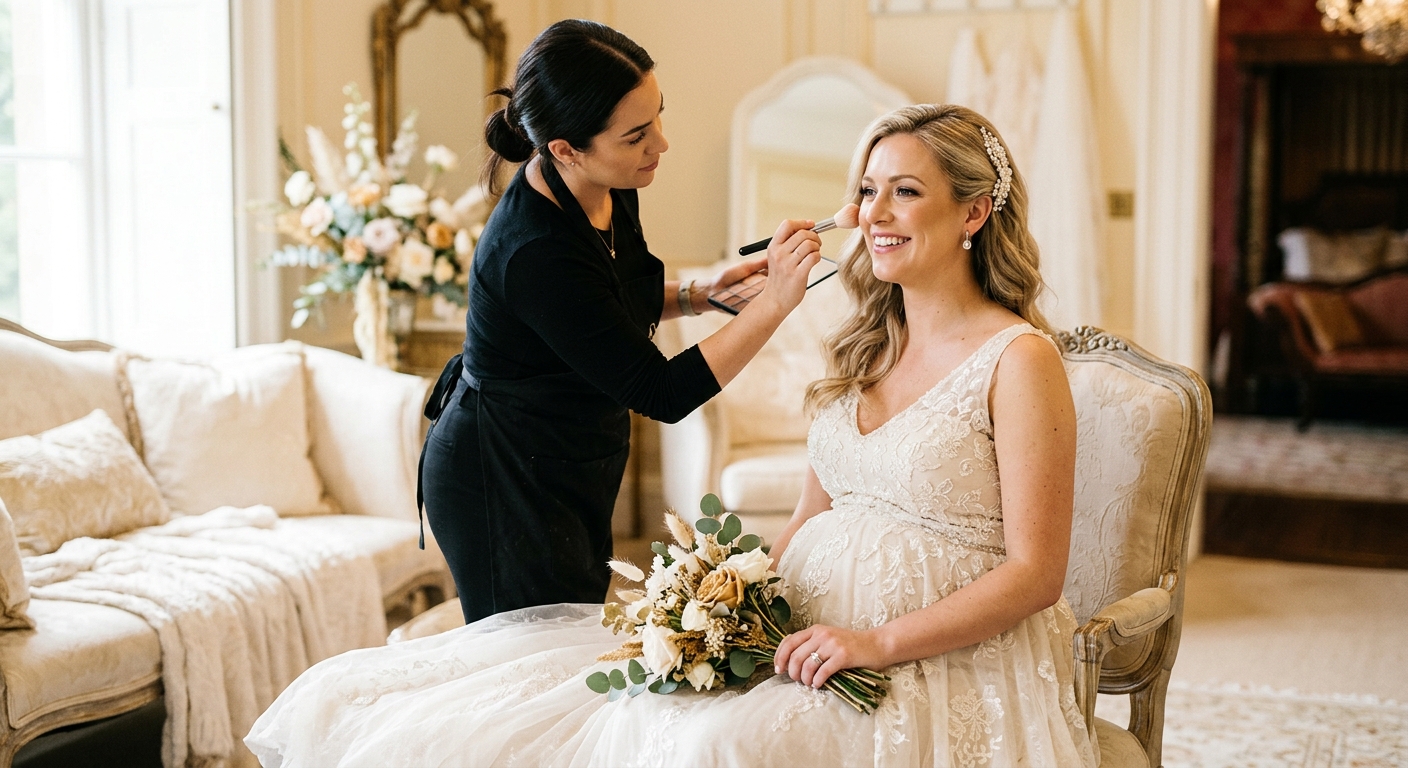
Getting married while pregnant is a doubly special experience: you are celebrating love and life at the same time. But pregnancy brings important changes to your skin that directly affect how makeup behaves, and there are ingredients you should avoid for your baby's safety.
As a professional bridal makeup artist in Lima, I have worked with moms-to-be in all trimesters of pregnancy. Each one has different needs, and the key is to adapt technique and products to what your body needs at that moment. This guide will give you all the information you need to look radiant without compromising your well-being or your baby's.
How does your skin change during pregnancy?
Hormones (especially estrogen and progesterone) generate changes that directly impact makeup:
- Increased oil production: many women who always had dry skin discover their skin becomes combination or oily during pregnancy. This affects foundation adhesion and can cause excessive shine.
- Hyperpigmentation (melasma): dark patches that appear mainly on the forehead, cheekbones and upper lip. One of the most frequent concerns of pregnant brides.
- Increased sensitivity: skin becomes more reactive. Products you previously tolerated without issues may cause irritation, redness or allergies.
- Irregular texture: some women experience hormonal acne, especially in the first trimester, or areas of extreme dryness.
- The "pregnancy glow": it is not a myth. Increased blood flow gives skin a natural luminosity that, when leveraged well, is spectacular in photos.
What ingredients should you avoid during pregnancy?
This is the most important part of the article. There are ingredients in makeup and skincare products that are not safe during pregnancy. Your makeup artist must know them and actively avoid them. Organizations like the World Health Organization (WHO) recommend extreme care with substances you are exposed to during pregnancy, including what you apply on your skin.
What makeup products ARE safe during pregnancy?
The good news is that the vast majority of professional makeup products are completely safe during pregnancy. The important thing is knowing how to choose.
Mineral foundations
Formulated with natural minerals (zinc oxide, titanium dioxide). Non-comedogenic, hypoallergenic and offer natural sun protection.
Hyaluronic acid
Present in hydrating serums and primers. A molecule your body naturally produces. Perfect for combating dryness without risks.
Topical vitamin C
Safe alternative for treating melasma. Brightens and evens skin tone. Ideal as a pre-makeup serum.
Mineral sunscreen
Based on zinc oxide or titanium dioxide (not chemical). Safer than chemical filters like oxybenzone.
Niacinamide (vitamin B3)
Controls oil, reduces pores and improves skin tone. Present in many quality primers and foundations. Completely safe.
Azelaic acid
Approved during pregnancy for treating acne and melasma. One of the few active options considered safe.
How I adapt my technique for pregnant brides
1. Gentler skin preparation
I use fragrance-free products (nausea is real, especially in the first trimester) and avoid aggressive chemical exfoliants. I focus on deep hydration with hyaluronic acid and a lightweight cream that does not feel heavy.
2. Foundation adapted to the new skin type
If skin has become oilier, I adjust to a satin or semi-matte finish foundation. If melasma has appeared, I work with color correctors (peach or salmon to neutralize dark patches) before the foundation, achieving coverage without caking.
3. The armored skin technique CAN be used
The armored skin technique is perfectly compatible with pregnancy as long as safe products are used in each layer. In fact, it is especially useful for pregnant brides because increased oil production can make makeup last less. The sealing layers compensate for that.
4. Fragrance-free products
Sense of smell intensifies during pregnancy. I use products with minimal or no fragrance, and avoid strong-smelling setting sprays. I also ensure the makeup space is well ventilated.
5. Comfort during the session
Bridal makeup sessions last 1.5-2 hours. For a pregnant bride, I make sure she has a comfortable chair with good back support, access to water and snacks, and we take breaks if needed.
Melasma: the number one concern
Pregnancy melasma (also called the "mask of pregnancy") is the most frequent concern of pregnant brides. According to the American Academy of Dermatology (AAD), these are dark patches that appear due to increased melanin stimulated by hormones, and they usually fade after delivery.
How I handle it on the wedding day:
- Color correcting: I apply peach or salmon corrector on hyperpigmented areas before the foundation. This neutralizes the dark tone without needing to pile on foundation layers.
- Buildable foundation: I use a medium-coverage foundation that can be built up only where needed, instead of full coverage across the entire face that would look heavy.
- Strategic illumination: I divert attention from the patches by highlighting the high points of the face (cheekbones, bridge of nose, cupid's bow) with subtle highlighter.
- Specific setting: I seal with extra attention the areas with corrector so it does not migrate during the event.
Wedding day tips for pregnant brides
- Eat well and bring snacks: dizziness and nausea can appear at any moment. Keep fruit, crackers and water at hand during getting ready.
- Wear comfortable shoes: feet swell more during pregnancy. Have a pair of flat backup shoes for the reception.
- Plan bathroom breaks: seems obvious, but the day's timeline should account for it. Bladder pressure is real.
- Expanded emergency kit: besides the usual touch-up kit, include antacids, fragrance-free wet wipes and a water bottle.
- Communicate your pregnancy to all vendors: not just your makeup artist. Your photographer, wedding planner and catering should know to adapt the experience.
Most importantly: enjoy your day
Getting married while pregnant is something beautiful. Do not let worry about makeup or products take away your enjoyment. With a makeup artist who knows pregnancy restrictions and can adapt her technique, you will look radiant, confident and completely yourself.
If you are planning your wedding in Lima and are pregnant, reach out to Sthefy Maquilla in advance so we can do the makeup trial with 100% safe products and design a look that adapts to your skin, your style and your moment. Learn more about my technique in the armored skin article, check the skin preparation checklist and explore my bridal services.
Bride and mom-to-be? Book your trial
At Sthefy Maquilla I work with pregnancy-safe products and adapt every detail to what your skin needs. Reach out and let's plan together.
Message me on WhatsApp